Guides
Oct 2026
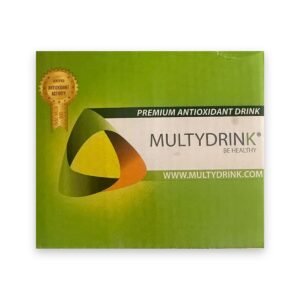
Multydrink: what it is, ingredients, how to take it and price in Colombia
What Multydrink is, what is in it, how to take it, its INVIMA registration, what it costs and how the distribution business works.
— Peptigene
Technical articles on research peptides: what each compound is, what the literature says, comparisons between molecules that are often confused, laboratory handling and how to evaluate a supplier. Written for researchers, with no promises and no dosing.
What Multydrink is, what is in it, how to take it, its INVIMA registration, what it costs and how the distribution business works.
The useful question is not "are they trustworthy?" but what you can verify yourself: COA, HPLC chromatogram, mass spectrometry and the red flags.

They always appear together and share an identical technical solution, which leads people to treat them as variants of the same thing. They are not.

Both are secretagogues and act on the same receptor. The difference is what else each one does, and in experimental design that decides almost everything.

They always appear together in the same research context, but they are not alternatives: one pathway is about blood supply, the other about cell movement.
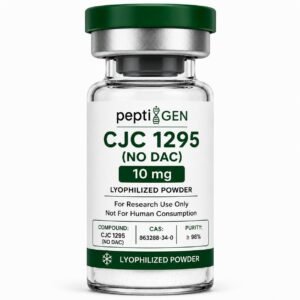
Many assume they are the same compound in two presentations. DAC changes how the molecule behaves over time so radically that they answer different questions.
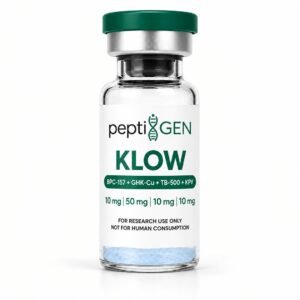
The difference between the two formulations comes down to one component, but that component brings a pathway the other three do not cover.
The most studied pentadecapeptide in tissue-repair research: what the evidence says, the caveat nobody mentions and how to judge quality.

TB-500 and thymosin beta-4 are not the same thing, and that confusion distorts any price comparison. Here is the difference.
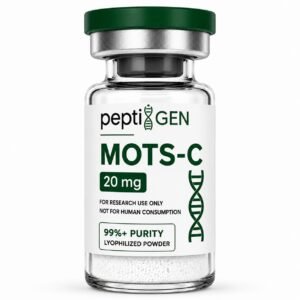
Encoded in the DNA of the mitochondrion, not the nucleus: what the AMPK pathway is and how it differs from metabolic agonists.