— Catálogo
Muscle & Recovery
This category brings together two families that research approaches by different routes: peptides studied in tissue repair and secretagogues, which act on the growth hormone axis. Knowing which family a compound belongs to is the first thing that organizes the choice.
Showing 1–12 of 13 results
-

Muscle & Recovery
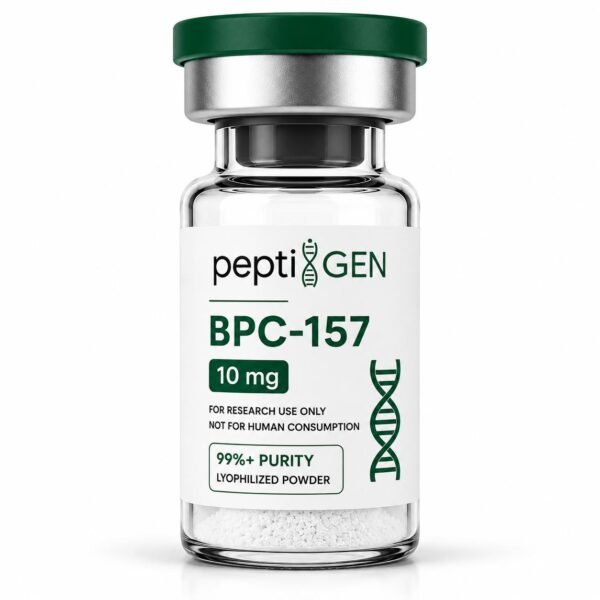
BPC-157 10mg
BPC-157 10 mg, high-purity lyophilized compound for scientific research. HPLC-verified batch.
-
Muscle & Recovery
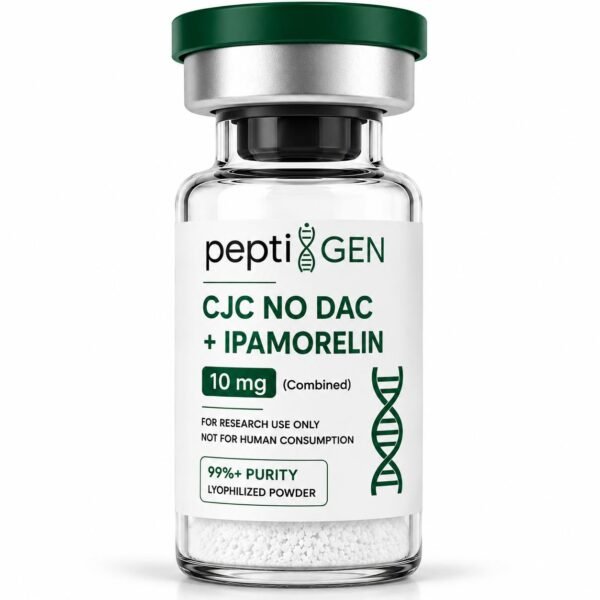
CJC-1295 + Ipamorelin 10mg
CJC-1295 + Ipamorelin 10 mg, high-purity lyophilized compound for scientific research. HPLC-verified batch.
-
Muscle & Recovery
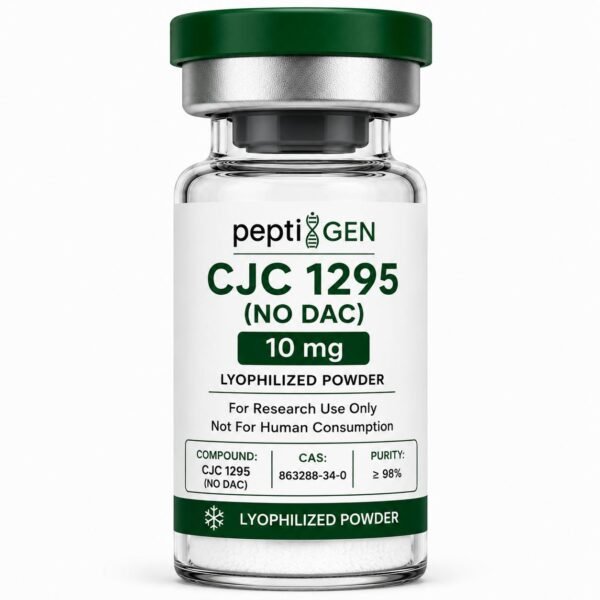
CJC-1295 No DAC 10mg
CJC-1295 No DAC 10 mg, high-purity lyophilized compound for scientific research. HPLC-verified batch.
-
Muscle & Recovery
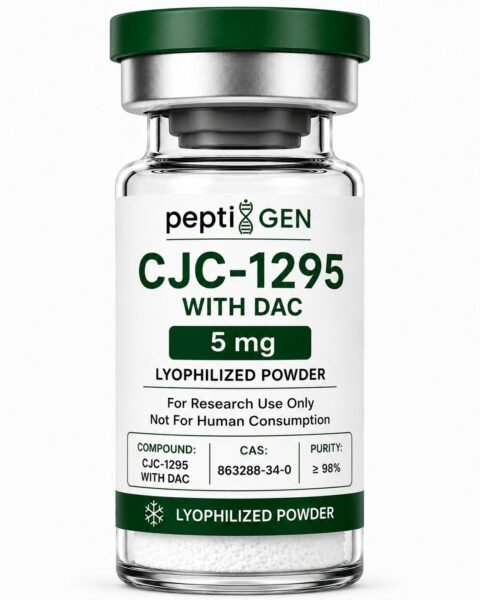
CJC-1295 with DAC 5mg
CJC-1295 with DAC 5 mg, high-purity lyophilized compound for scientific research. HPLC-verified batch.
-
Muscle & Recovery
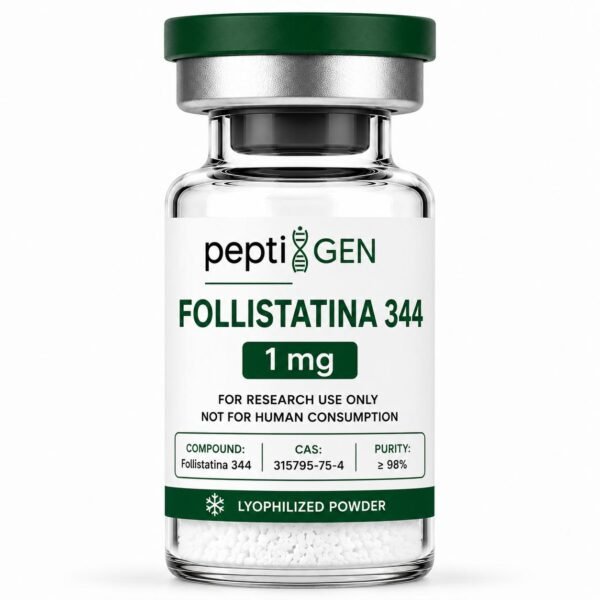
Follistatin 344 1mg
Follistatin 344 1 mg, high-purity lyophilized compound for scientific research. HPLC-verified batch.
-
Muscle & Recovery
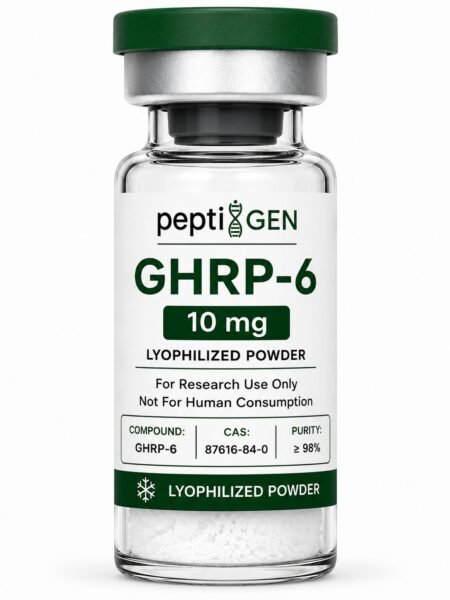
GHRP-6 10mg
GHRP-6 10 mg, high-purity lyophilized compound for scientific research. HPLC-verified batch.
-
Muscle & Recovery
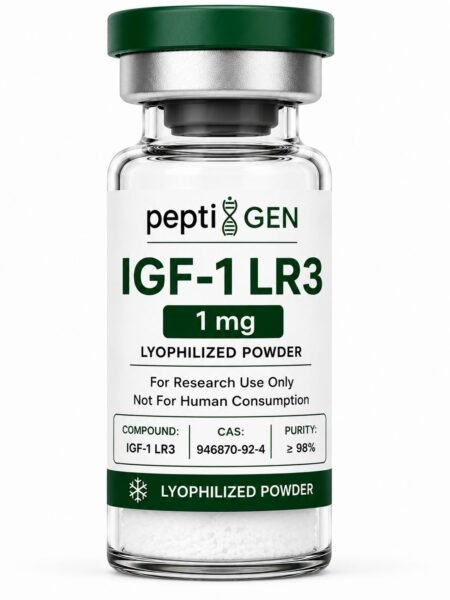
IGF-1 LR3 1mg
IGF-1 LR3 1 mg, high-purity lyophilized compound for scientific research. HPLC-verified batch.
-
Muscle & Recovery
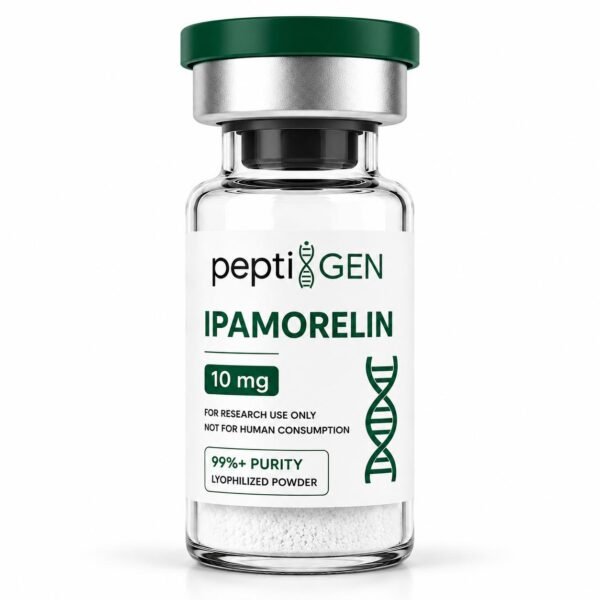
Ipamorelin 10mg
Ipamorelin 10 mg, high-purity lyophilized compound for scientific research. HPLC-verified batch.
-
Muscle & Recovery
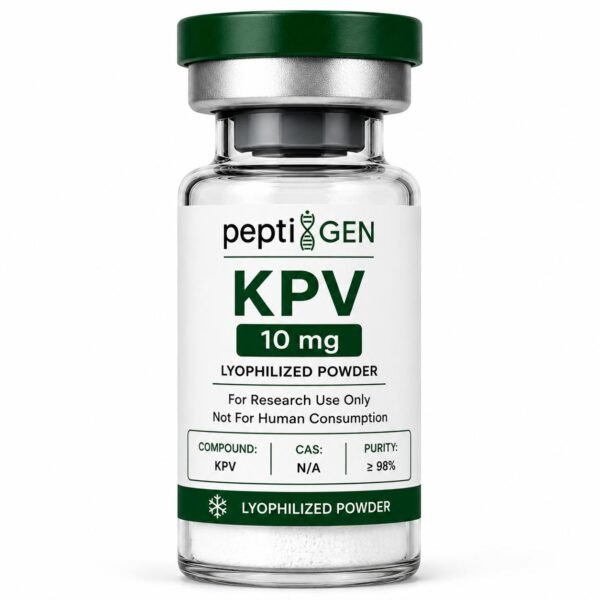
KPV 10mg
KPV 10 mg, high-purity lyophilized compound for scientific research. HPLC-verified batch.
-
Muscle & Recovery
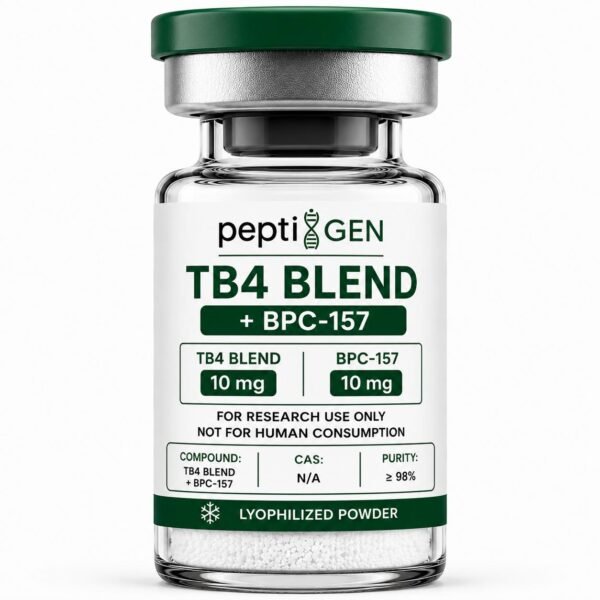
TB4 Blend + BPC-157 10mg + 10mg
TB4 Blend + BPC-157 10 mg + 10 mg, high-purity lyophilized compound for scientific research. HPLC-verified…
-
Muscle & Recovery
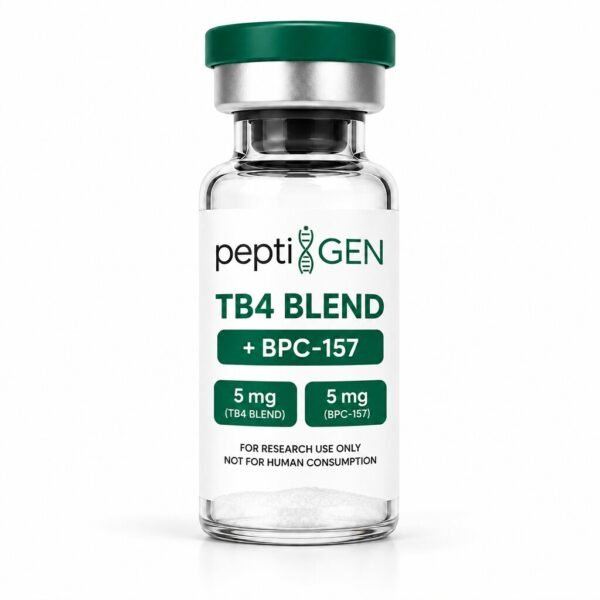
TB4 Blend + BPC-157 5mg + 5mg
TB4 Blend + BPC-157 5 mg + 5 mg, high-purity lyophilized compound for scientific research. HPLC-verified…
-
Muscle & Recovery
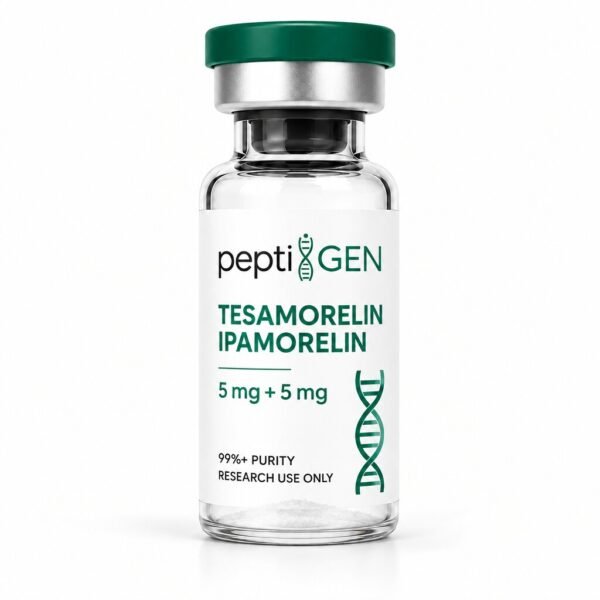
Tesamorelin + Ipamorelin 5mg + 5mg
Tesamorelin + Ipamorelin 5 mg + 5 mg, high-purity lyophilized compound for scientific research. HPLC-verified batch.
Tissue-repair peptides
BPC-157 is the most documented of the group. It derives from a protein in gastric juice and is studied for its relationship with angiogenesis through the VEGF pathway; one of its most cited properties is stability in acidic media. TB-500 addresses another route: a 7-amino-acid fragment of thymosin beta-4 that acts on actin dynamics, on which cell migration depends. Because the two pathways do not overlap, combined formulations exist, such as the TB4 Blend with BPC-157. KPV, a tripeptide derived from alpha-MSH, is investigated through the NF-κB pathway.
Secretagogues and GHRH analogs
Here the key distinction is the receptor. GHRH analogs such as CJC-1295 act on the GHRH receptor; secretagogues such as Ipamorelin and GHRP-6 act on the ghrelin receptor. Since the targets differ, both can be activated at once, which is where the combined formulations come from. Within the GHRH analogs, the DAC version binds albumin and sustains elevation for days, while the no-DAC version produces a brief pulse that reproduces the physiological pattern.
Completing the category: IGF-1 LR3, an analog modified to escape the binding proteins that regulate native IGF-1, and Follistatin 344, a glycoprotein that antagonizes myostatin.
Products in this category
- BPC-157 10mg
- CJC-1295 + Ipamorelin 10mg
- CJC-1295 No DAC 10mg
- CJC-1295 with DAC 5mg
- Follistatin 344 1mg
- GHRP-6 10mg
- IGF-1 LR3 1mg
- Ipamorelin 10mg
- KPV 10mg
- TB-500 10mg
- TB4 Blend + BPC-157 10mg + 10mg
- TB4 Blend + BPC-157 5mg + 5mg
- Tesamorelin + Ipamorelin 5mg + 5mg
All products in this category are intended exclusively for scientific research and laboratory development. They are not medicines, hold no INVIMA sanitary registration and are not fit for human or animal consumption.